

Surviving the Holiday Season
A Fertility-Focused Guide to Staying Regulated, Nourished, and Emotionally Supported — With Hope Intact
The holiday season is meant to be joyful and connective, yet for many women and couples trying to conceive, it can feel tender, heavy, and deeply complex. Joy and grief often sit side by side. Changes in routine, festive food, alcohol, disrupted sleep, and emotionally charged gatherings can quietly challenge the nervous system and hormonal balance — especially when you are already carrying hope, longing, and resilience in equal measure.
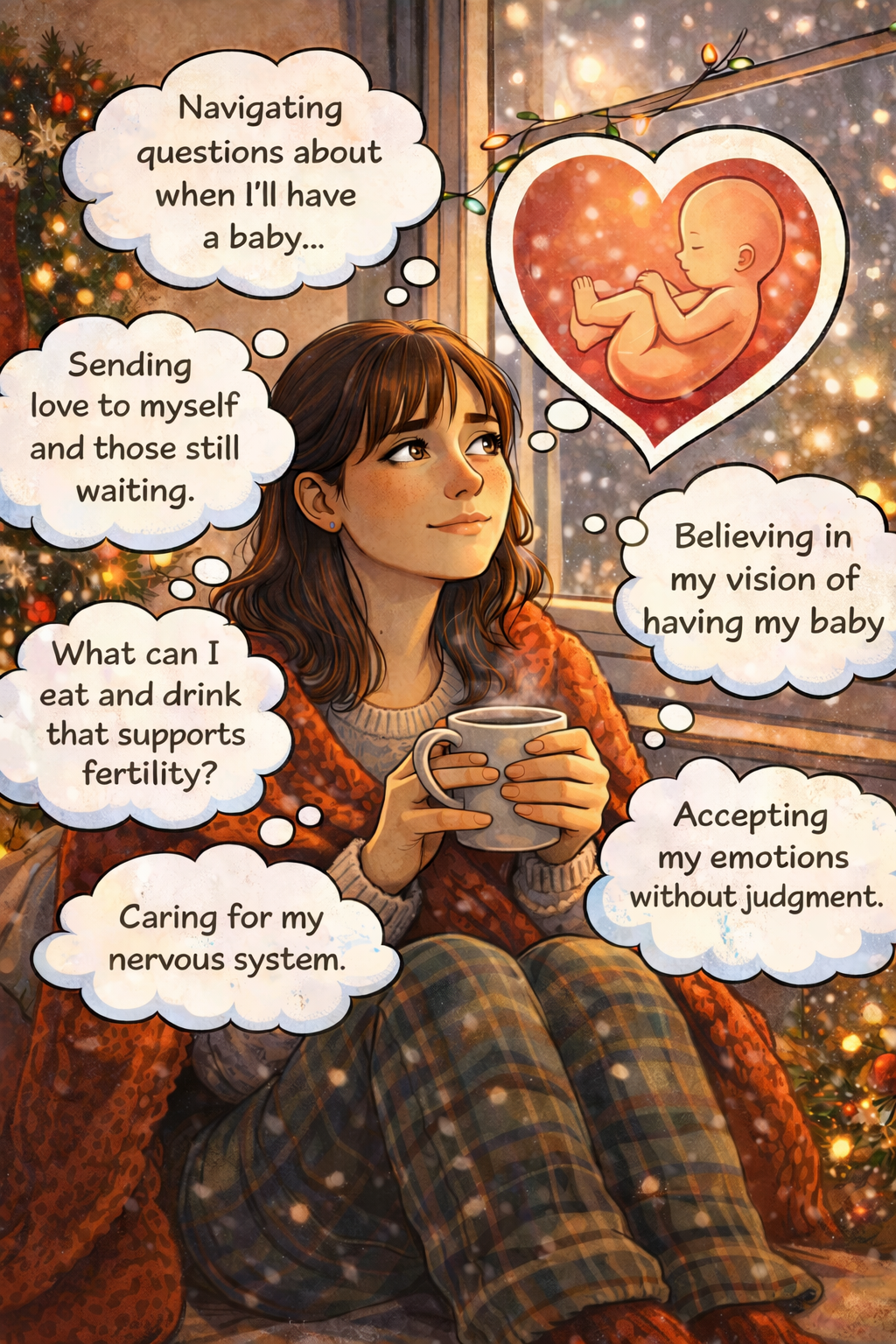
This guide is not about doing everything “right.”
It’s about meeting yourself with compassion, protecting your body and nervous system, and choosing hope even when the waiting feels long — so you move into the new year feeling supported, steady, and still believing.
You are not behind.
You are not broken.
And this season — difficult as it may be — is not the end of your story.
Below are practical, realistic strategies to help you stay regulated, nourished, emotionally supported, and rooted in courage during the festive season.
1. Start With a Fertility-Supportive Mindset
Grounded, Gentle, and Hope-Focused
a. Set a clear intention
Before the festivities begin, pause and ask yourself:
What would it look like to move through this season with care instead of pressure?
Your intention might be:
- protecting your energy
- supporting hormone balance
- staying emotionally steady
- honouring your grief and your hope
- or simply arriving in January without feeling depleted
A clear intention acts like a compass — not to control outcomes, but to guide choices with kindness instead of guilt.
b. Shift the focus beyond food
Holiday gatherings often revolve around food, which can feel stressful if you’re navigating fertility-focused nutrition or restrictions.
Please remember: a few meals will not undo months of healing.
The body responds to patterns, not perfection.
A powerful reframe:
Lean into connection rather than consumption.
Talk with someone new. Help the host. Offer warmth where you can. These moments of belonging signal safety to the nervous system — and safety is foundational for hormonal health and fertility.
2. Plan Ahead for Christmas Events
Preparation as an Act of Self-Trust
a. Have a nervous system plan
If festive gatherings tend to feel overstimulating or emotionally loaded, support your nervous system proactively. This might include:
- gentle breathwork
- grounding techniques
- practitioner-recommended supplements for calm and regulation
This is not weakness — it is resilience in action.
If nutrition feels important to you this season, decide before you arrive:
- one plate of food
- one small dessert
Structure reduces decision fatigue and allows you to stay present instead of hypervigilant.
b. Bring a fertility-friendly dish
Bringing something nourishing ensures there’s at least one option that supports your body — and often becomes a gift to others as well.
Think:
- fresh fruit platters
- seasonal salads
- seafood-friendly sides
- protein-balanced desserts
This small act creates ease, reduces stress, and reinforces: I can care for myself anywhere.
c. Don’t skip meals
Arriving overly hungry often backfires — hormonally and emotionally.
A light, protein-rich snack beforehand helps:
- stabilise blood sugar
- support cortisol balance
- reduce overwhelm and impulsive eating
You arrive grounded — not depleted.
3. Mindful Eating at Festive Gatherings
Nourishment Without Restriction
a. Balance the plate
A simple fertility-supportive approach:
- ½ plate vegetables
- ¼ plate protein
- ¼ plate carbohydrates
This supports blood sugar stability, hormone signalling, and digestion — without rigid rules.
b. Step away from the buffet
Once you’ve plated your meal, move to a different space.
Distance creates awareness. Awareness creates choice.
c. Slow down and savour
Digestion begins in the nervous system.
Eating slowly allows satiety signals to register and helps your body feel safe enough to receive nourishment.
Put the fork down between bites.
Taste your food.
Let the moment land.
d. Choose what truly delights
Not all treats are worth the hormonal cost — and that’s okay.
Skip the “meh.”
Choose what genuinely brings pleasure.
Mindful indulgence is an act of self-respect.
4. Be Mindful With Alcohol
a .Support Hormones Without Deprivation
Alcohol can affect hormone balance, sleep quality, blood sugar regulation, and implantation — but this doesn’t mean all-or-nothing thinking.
b. Know your limits
If you choose to drink, moderation matters — especially when supporting fertility.
c. Alternate with water or nourishing mocktails
Hydration protects the nervous system and reduces hormonal strain.
Mineral-rich mocktails or magnesium drinks can provide a calming ritual without the impact.
d. Eat before drinking
Protein slows alcohol absorption and protects blood sugar and cortisol balance — a simple but powerful strategy.
5. Stay Gently Active
Movement as Medicine, Not Punishment
a. Morning movement matters
Moving earlier in the day supports insulin sensitivity, mood, and stress regulation.
A walk to see Christmas lights, gentle stretching, or a relaxed jog can be deeply grounding.
b. Schedule it like an appointment
Your well-being is not optional.
Nature walks, beach time, or fresh air regulate the nervous system and support hormonal health.
c. Make it social and joyful
Movement doesn’t need to be structured.
Family walks, dancing, backyard games — joyful movement supports fertility far more than forced workouts.
6. Emotional Survival When Your Baby Isn’t Here Yet
Holding Hope While You Hurt
For many on the fertility journey, the holidays carry a quiet grief.
While others celebrate pregnancies, newborns, and milestones, you may be holding longing, loss, resilience, and hope — all at once.
If this season feels heavy, please know: nothing is wrong with you.
When people ask, “When are you having a baby?”
You are not obligated to explain, justify, or disclose.
Prepare one or two protective responses:
- “We’re taking things one step at a time.”
- “That’s something we’re keeping private.”
- “When there’s news, we’ll share it.”
Boundaries are not walls — they are acts of self-preservation.
When everyone else seems pregnant
You can feel joy for others and grief for yourself at the same time.
Both emotions belong.
If something feels too painful, it’s okay to:
- leave early
- skip an event
- protect your heart without explanation
This is not avoidance.
It is self-regulation — and self-respect.
Allow emotions to move through you
Suppressing grief keeps the nervous system stuck in survival mode — and chronic stress directly impacts fertility.
Instead:
- name what you feel
- journal it
- cry if needed
- talk with someone who truly understands fertility journeys
Emotions that are felt can move.
Emotions that are suppressed stay stored in the body.
Create emotional safety anchors
Have a safe person, a grounding ritual, or an exit plan.
Simple tools:
- hand on heart with a slow exhale
- feet on the floor, noticing sensation
- reminding yourself: “I am safe right now.”
A regulated nervous system supports emotional resilience — and reproductive health.
Remember This Truth
Your worth is not defined by your fertility status.
Your body is not failing you.
This waiting season — painful as it is — is not the end of your story.
You are still moving forward.
You are still becoming.
And hope is still allowed here.
I see you.
I honour your courage.
And you are not alone.
A Gentle Reminder
The goal of this season is not control — it is care.
Care for your hormones.
Care for your nervous system.
Care for your heart and those you love.
And above all, care for yourself — exactly where you are, with compassion, courage, and the quiet knowing that hope does not disappear just because the road is longer than expected.
You are still in this.
And there is still hope. 💛
WELL DONE! You have successfully unlocked the PDF download link.
Click here to download the PDF.
Click here to download the PDF.
Share this article
About the Author: Iva Keene MRMed. ND. - Natural Fertility Specialist
Iva Keene is co-founder, creator and award-winning author of the NFP Program and director of Natural-Fertility-Prescription.com. She holds a Bachelor Degree in Health Science in Naturopathy and a Master Degree in Reproductive Medicine. She has been a qualified and internationally accredited Naturopathic Physician for over 15 years. Since founding NFP in 2008, Iva’s articles, videos, guides, and reports have reached over 1.3 million people. Iva has dedicated her professional life to supporting couples on their path to parenthood with scientifically grounded information, protocols, and coaching around preconception care, natural infertility treatments, and integrative reproductive health.