

What Is the True Cause of Your Fertility Condition, Like Endometriosis?
After decades working in the field of natural fertility—analyzing thousands of diets, bloodwork reports, hormone panels, lifestyles, stress levels, sleep patterns, and more—there is still one aspect that many people don’t want to, or don’t dare to, venture into: trauma and abuse.
Even though studies show that over half of the women with endometriosis have experienced some form of trauma or abuse, many patients cannot recall any. Could it be that the trauma was inherited from their mother or grandmother—through the genes that were passed on, leaving no direct memory?
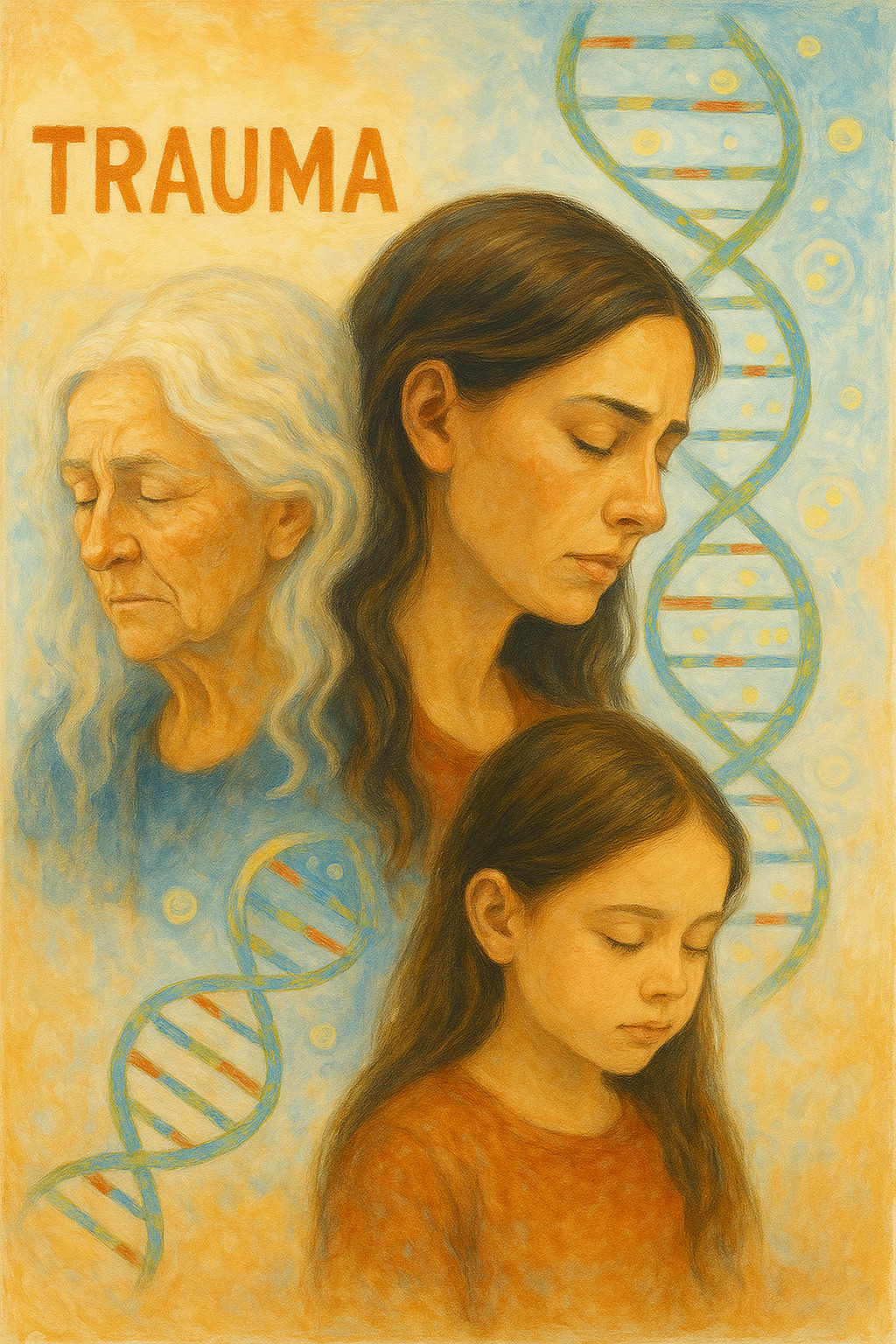
Fascinating studies suggest that trauma (such as abuse) experienced by a grandmother could contribute to a higher risk of conditions like endometriosis in her daughter or granddaughter. This likely happens through a combination of epigenetic, psychological, and environmental pathways—mechanisms that are embedded in the eggs and sperm of men and women who’ve endured trauma.
Women with histories of childhood trauma or abuse have been found to have a higher risk of developing endometriosis, especially its chronic pain forms. And now, growing evidence shows that intergenerational trauma—for example, trauma experienced by a mother or grandmother—may increase susceptibility to chronic conditions like endometriosis by priming stress, immune, and hormonal pathways.
Epigenetic Evidence from Human Studies
- Holocaust Survivors and Their Descendants
- Studies found altered DNA methylation in stress-response genes like NR3C1 (glucocorticoid receptor) and FKBP5 in both survivors and their children.
- These methylation patterns were linked to altered cortisol regulation and higher PTSD/anxiety risk in offspring.
- Studies found altered DNA methylation in stress-response genes like NR3C1 (glucocorticoid receptor) and FKBP5 in both survivors and their children.
- Syrian War Survivors – Hama Siege (1982)
- Grandchildren of women pregnant during the siege showed distinct epigenetic marks, despite never directly experiencing the conflict.
- This is among the first human evidence that trauma can epigenetically affect multiple generations.
- Grandchildren of women pregnant during the siege showed distinct epigenetic marks, despite never directly experiencing the conflict.
- Dutch Hunger Winter (WWII)
- Offspring exposed in utero during the famine had increased risks of obesity, cardiovascular disease, diabetes, and other conditions.
- Some effects were observed in grandchildren as well, suggesting transgenerational programming.
- Offspring exposed in utero during the famine had increased risks of obesity, cardiovascular disease, diabetes, and other conditions.
Epigenetic modifications—like DNA methylation, histone changes, and even sperm RNA—can sometimes survive germline reprogramming and persist across generations.
In Summary: Trauma in a Grandmother May Contribute To…
- Altered stress biology in the mother
- Changes in the in-utero environment if the mother was pregnant while stressed
- Epigenetic marks passed down via egg or sperm
- Increased risk of stress-sensitive conditions in the grandchild—such as endometriosis, PCOS, autoimmune disorders, or mood disorders
A Deeper Reflection
When we look back at history, women have endured incredible hardship—defined as the “weaker sex,” denied education, valued only for marriage or reproduction, burned as witches for understanding birth or herbal lore, kidnapped and traded as slaves. The history of female abuse is long and deep.
I’m not sharing this to make anyone feel like a victim, but to empower you to be a victor. To help you break free. The history of your lineage is written on your DNA—and internal and external triggers can activate it. Maybe you are the generation meant to lift that trauma—and spare your daughters a similar experience.
Studies show that the number of women affected by endometriosis is actually much higher than diagnosed—many are symptomless or misdiagnosed, and never seek investigation.
But what if lifting ancestral trauma from your genes could help your body reprogram itself at the core? What if it could not only support conception and a healthy baby—but also promote deep, multi-level healing?
A Message of Empowerment
Don’t let your diagnosis define you or limit your potential.
Your body is always communicating—through symptoms, hormone shifts, skin, weight, energy, sleep, cravings, mood. If we want a different dialogue from our body, we shouldn’t silence it—we should listen, understand, and address the root cause.
Let your body tell a new story—one of balance, energy, peace, joy, and healing.
If you’re seeking answers for infertility, endometriosis, PCOS, or any other condition, start this journey holistically. Let your body speak—and learn how to change the story it tells.
References:
- Bierer, L. M., Bader, H. N., Daskalakis, N. P., Lehrner, A., Makotkine, I., Seckl, J. R., … & Yehuda, R. (2014). Offspring of Holocaust survivors have altered cortisol metabolism. Psychoneuroendocrinology, 40, 213–220.
- Radtke, K. M., Ruf, M., Gunter, H. M., Dohrmann, K., Schauer, M., Meyer, A., & Elbert, T. (2015). Transgenerational impact of intimate partner violence on methylation in the promoter of the glucocorticoid receptor. Development and Psychopathology, 23(2), 397–409.
- Yehuda, R., Daskalakis, N. P., Desarnaud, F., Makotkine, I., Lehrner, A., Koch, E., … & Bader, H. N. (2016). Epigenetic biomarkers as predictors and correlates of symptom improvement following psychotherapy in combat veterans with PTSD. Frontiers in Psychiatry, 7, 195.
- Yehuda, R., Daskalakis, N. P., Lehrner, A., Desarnaud, F., Bader, H. N., Makotkine, I., … & Meaney, M. J. (2014). Influences of maternal and paternal PTSD on epigenetic regulation of the glucocorticoid receptor gene in Holocaust survivor offspring. The American Journal of Psychiatry, 171(8), 872–880.
- Nomura, Y., Davey, M., Hurd, Y. L., Duong, M. T., & Silverman, M. E. (2024). Prenatal maternal trauma and PTSD symptoms are associated with placental glucocorticoid receptor gene (NR3C1) methylation. Placenta, 141, 34–41.
- Karipidis, I., Georgiou, M., & Tzavara, C. (2024). Childhood adversity and gynecological disorders: A systematic review. Fertility and Sterility, 121(3), 538–547.
- Harris, H. R., Costenbader, K. H., Mu, F., Kvaskoff, M., Malspeis, S., Karlson, E. W., & Missmer, S. A. (2018). Childhood abuse and risk of endometriosis. Human Reproduction, 33(9), 1657–1668.
- Scientific Reports. (2025). Intergenerational epigenetic effects of war trauma in Syrian refugee families: Evidence from blood methylation and stress biomarkers. Scientific Reports, 15, Article 7631.
WELL DONE! You have successfully unlocked the PDF download link.
Click here to download the PDF.
Click here to download the PDF.
Share this article
About the Author: Iva Keene MRMed. ND. - Natural Fertility Specialist
Iva Keene is co-founder, creator and award-winning author of the NFP Program and director of Natural-Fertility-Prescription.com. She holds a Bachelor Degree in Health Science in Naturopathy and a Master Degree in Reproductive Medicine. She has been a qualified and internationally accredited Naturopathic Physician for over 15 years. Since founding NFP in 2008, Iva’s articles, videos, guides, and reports have reached over 1.3 million people. Iva has dedicated her professional life to supporting couples on their path to parenthood with scientifically grounded information, protocols, and coaching around preconception care, natural infertility treatments, and integrative reproductive health.
Previous Post
“The findings… could lead to new treatment options for infertility”: New study reveals surprising link between muscles and fertility
Next Post
There is a “minimum human equivalent dose of microplastics leading to abnormal male semen quality”: fertility study reveals hidden danger in everyday plastics