

Can you get pregnant at 45 if you ovulated on cycle day 50, have AMH of 0.2 and FSH of 36?
The Conventional View and Answer
If you asked this question at an IVF clinic, they’d probably tell you that you are too old and because of your age (45) and low AMH (0.2) and high FSH (36) you are not a good candidate for IVF with your own eggs and should consider egg donation if you wish to proceed with IVF.
If you then also told them that you had a miscarriage at 11 weeks at the age of 43 in spite of changing your lifestyle, cosmetics and cleaning products, taking handfuls of supplements daily for 3 years and tracking your cycle religiously, plus two failed IUIs with stimulation drugs which caused your cycle to become over 50 days long; they’d tell you that again because of your age, hormonal imbalances and poor egg quality you can’t conceive naturally either and should consider donor eggs.
Natural Fertility View and Answer
Even though you are of advanced age for fertility (45), your ovarian reserve is low (AMH 0.2), and the egg quality is on the lower end (FSH 36), you are still menstruating and ovulating, we can work on improving the quality of the eggs you have left.
At the same time, we need to optimize the sperm to minimize the risk of miscarriages and balance your hormones post-stimulation medication as well as detox your body and the liver from any residues. On top of that, we need to evaluate the supplements you are taking and make changes where necessary based on a range of tests that will help us determine your toxicity levels, your nutritional status, your genetic polymorphisms (mutations) and more.
Let’s not forget the stress of infertility and past failures as well as your belief system which has been filled with doubt based on your past experiences.
18 Weeks since starting the 16 Week NFP Coaching Program
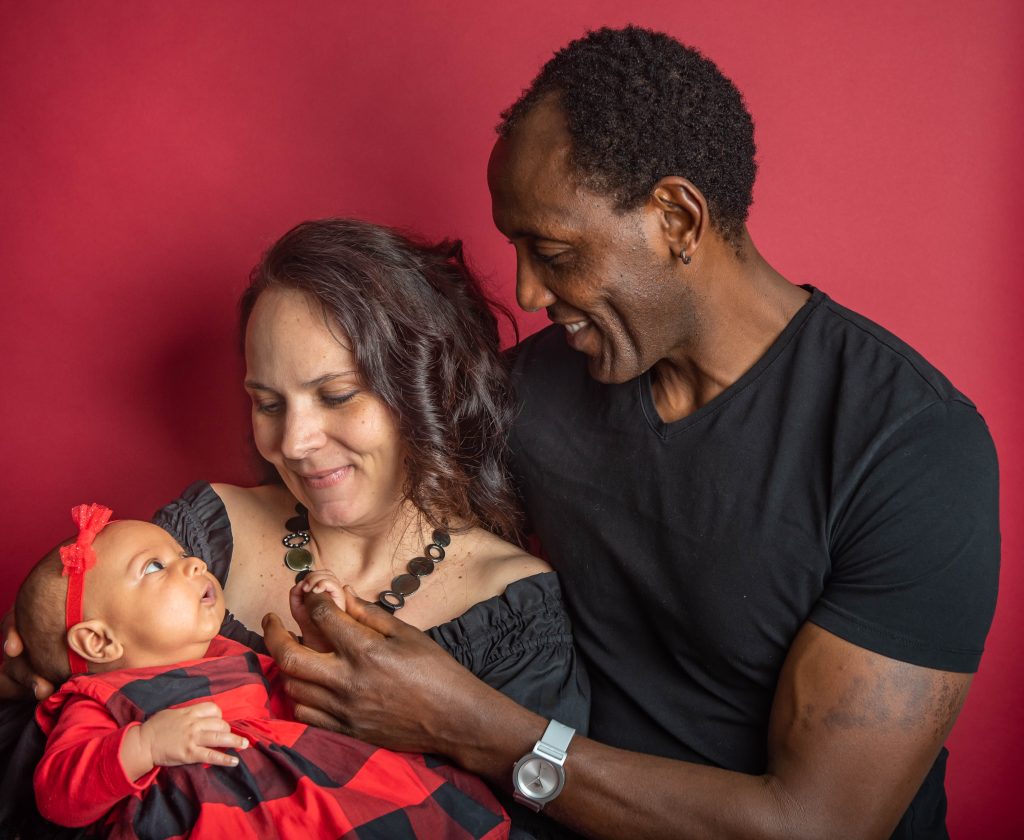
Positive pregnancy test after four months of diligently taking supplements tailored to this couple’s individual case, addressing detected genetic polymorphisms, dietary and lifestyle adjustments (yes, the ones they implemented before were not enough/not the right ones), improving sperm quality and DNA integrity of the sperm, working on stress levels using different techniques, optimizing different body systems and organs which indirectly impact fertility.
Due to the age and history of miscarriage in the past, this patient didn’t think this pregnancy would last. But it did, the ultrasound showed a strong heartbeat, the NIPT (non-invasive prenatal test) detected a healthy 46 XY embryo and the rest of the pregnancy and delivery went smoothly resulting in a beautiful, healthy baby girl and overjoyous parents.
What about the egg that was ovulated on cycle day 50? Isn’t it too old?
We are often led to believe that the cycle needs to be textbook perfect, 28 days, ovulating on cycle day 14, give or take a day or two. This perfect cycle originated in the ancient days when we lived by the moonlight and candlelight and at night nothing much happened but sleep.
We live in the modern days of a modern woman who is bombarded by artificial light at night, and may even work shifts at night under the bright neon lights. Moonlight is sparse if you live in a big urban area filled with smog clouds blocking the stars and the moon. Our bodies had to learn to adjust and adapt to the new environment and patterns. So, was this egg healthy? Absolutely! How can we tell? The pregnancy resulted in a healthy baby born at full term.
If the egg was of poor quality, too old, and chromosomally abnormal, this pregnancy would most likely have ended in a miscarriage or the NIPT would detect abnormalities.
What does this tell us?
Optimizing the body and mind as a whole is more important than the perfect 28-day cycle. The body will ovulate when it feels it’s ready. Our body is run by an intelligence which created everything in nature. It’s so much smarter than we can ever imagine with our human brains, and it operates on a subconscious level we are consciously not aware of. So, trust it, it knows more than you or I or anyone on the Planet.
Is this the norm?
Unfortunately not yet, because most women/couples give up on their bodies after being told that they are too old and need IVF and donor eggs. Even some of those who don’t give up and try their hardest don’t get these results. In life, there are no absolutes, and no one can guarantee an outcome. But it’s like that with any goal/mission you try to achieve.
Should that stop you from even trying? If your heart is still longing and whispering to give it a go, most of us have no choice but to keep trying until this whisper goes away, either because the goal has been reached or the lessons of this quest have been learned.
All I know is that 20 years ago when we first started offering this service a pregnancy and a healthy full-term birth in the mid to late 40s was very rare. Now, it’s becoming a norm. It’s like when Roger Bannister ran the first four-minute mile and broke the barrier that was considered impossible. Shortly after, many other athletes broke the barrier too and ran even faster than him. The pioneers of anything leave the footprints in the fabric of collective human consciousness making it possible for others to follow suit.
So don’t give up on yourself and your miraculous body!
You can read the story of the patient I shared above and many others here.
WELL DONE! You have successfully unlocked the PDF download link.
Click here to download the PDF.
Click here to download the PDF.
Share this article
About the Author: Iva Keene MRMed. ND. - Natural Fertility Specialist
Iva Keene is co-founder, creator and award-winning author of the NFP Program and director of Natural-Fertility-Prescription.com. She holds a Bachelor Degree in Health Science in Naturopathy and a Master Degree in Reproductive Medicine. She has been a qualified and internationally accredited Naturopathic Physician for over 15 years. Since founding NFP in 2008, Iva’s articles, videos, guides, and reports have reached over 1.3 million people. Iva has dedicated her professional life to supporting couples on their path to parenthood with scientifically grounded information, protocols, and coaching around preconception care, natural infertility treatments, and integrative reproductive health.